As advanced AI platforms become central to research, coding, and business workflows, understanding their operational limits is no longer optional—it is essential. DeepSeek, like other large language model platforms, applies structured controls on usage to maintain system stability, ensure fair access, and manage operational costs. These controls come in three primary forms: message caps, token limits, and rate limits. If you rely on DeepSeek heavily, knowing how these mechanisms function—and how to work within them strategically—can dramatically improve your productivity without violating terms of service.
TLDR: DeepSeek enforces three main types of limits: message caps (how many prompts you can send), token limits (how much text can be processed at once), and rate limits (how fast requests can be sent). These safeguards protect infrastructure stability and fair usage. While bypassing limits improperly can lead to account restrictions, there are legitimate and safe strategies to optimize usage, including token efficiency, batching, upgrading plans, and API optimization. Understanding how limits are calculated is the key to maximizing performance without risking suspension.
Why Usage Limits Exist
Before exploring the mechanics, it is important to understand why these limits are imposed. Advanced AI models require substantial computational power. Each query consumes processing cycles, memory allocation, and bandwidth. Without constraints, a small number of heavy users could overwhelm infrastructure.
DeepSeek applies usage limits to:
- Ensure system stability during peak demand
- Distribute access fairly among users
- Control infrastructure and GPU costs
- Prevent automated abuse or scraping
These limitations are therefore not arbitrary; they are structural controls that maintain service reliability.
1. Message Caps Explained
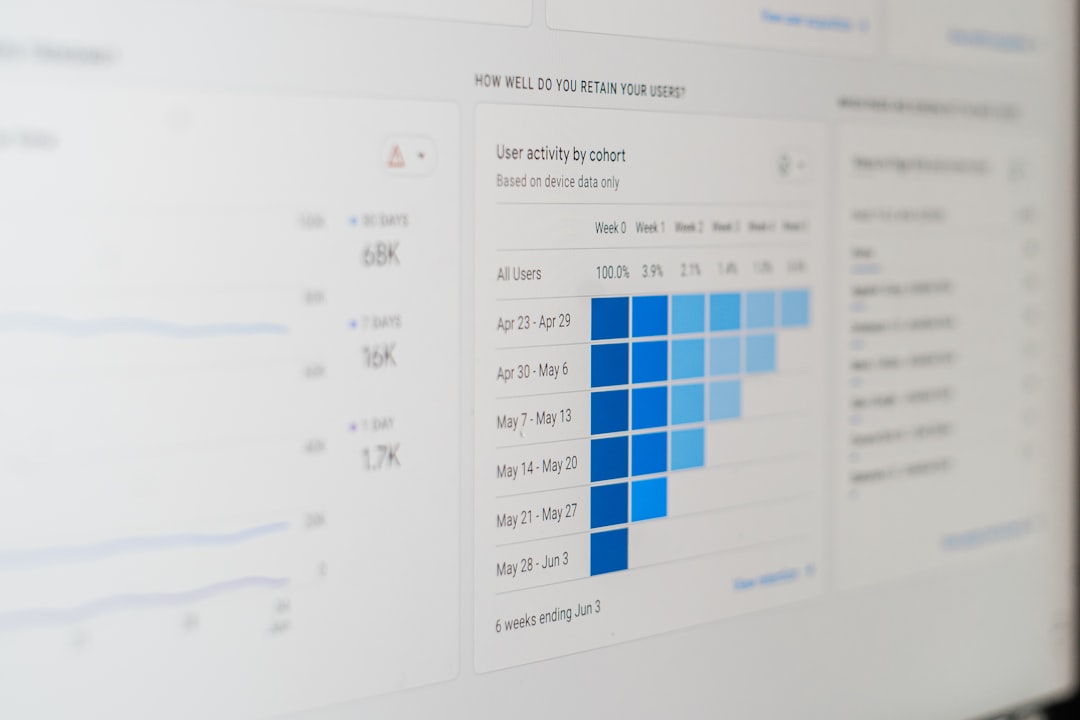
A message cap is the maximum number of prompts or chat exchanges allowed within a specific time window. This window may be hourly, daily, or monthly depending on the subscription tier.
For example:
- Free users may receive a lower daily message quota.
- Paid accounts typically have significantly higher caps.
- Enterprise plans may operate on customized usage agreements.
Message caps are relatively straightforward: once you reach the limit, further prompts are temporarily blocked until the reset period begins.
Important distinction: A “message” typically refers to a single exchange in a chat. However, some systems may calculate usage based on total processed text rather than simply the count of prompts. Always verify how DeepSeek defines a billable message within your plan.
Common Misunderstandings About Message Caps
- Long prompts count the same as short ones. Not always true—while the number of messages may be capped, token limits still apply within each message.
- Refreshing the browser resets limits. It does not. Limits are server-side.
- Using multiple tabs bypasses caps. It does not. Usage is tied to your account or API key.
2. Token Limits: The Technical Core
If message caps are the visible limitation, token limits are the technical backbone behind the scenes.
A token is a fragment of text processed by the language model. It may represent:
- A full word
- A part of a word
- Punctuation
- A space
For English text, one token is roughly 0.75 words on average, though this varies.
DeepSeek enforces two primary token-related constraints:
- Input token limit – the maximum size of your prompt
- Output token limit – the maximum size of the model’s response
Additionally, there is often a context window limit, which is the maximum total tokens (input + previous conversation + response) that can be handled in a single interaction.
Why Token Limits Matter
If your prompt plus conversation history exceeds the model’s context window:
- Older parts of the conversation may be truncated.
- You may receive an error message.
- The model may produce incomplete responses.
This is particularly relevant for:
- Long coding sessions
- Legal document review
- Research synthesis
- Data-heavy prompts

Example Scenario
Suppose DeepSeek offers a 32,000-token context window. If your existing conversation consumes 28,000 tokens and you submit a 2,000-token prompt while requesting a 4,000-token output, you exceed the limit. The system must either truncate earlier context or reject the request.
Understanding this calculation allows you to proactively compress context before reaching hard limits.
3. Rate Limits: Speed Control Mechanisms
Rate limits restrict how many requests can be sent within a defined time period—often measured per minute (RPM) or per second (RPS).
Rate limiting is particularly relevant for:
- API integrations
- Automated workflows
- Batch processing systems
Even if you have ample monthly message allowance, sending 100 rapid API calls within seconds may trigger rate limiting. When this happens, the system may:
- Return a 429 (Too Many Requests) error
- Temporarily throttle your requests
- Delay future responses
Rate limits protect against bot abuse and denial-of-service style overloads.
How to Work Within Limits Strategically
Attempting to bypass limits through unauthorized methods—such as account duplication, proxy abuse, or automated scraping—can result in suspension. However, there are fully legitimate strategies to optimize usage safely.
1. Improve Token Efficiency
- Be concise. Remove unnecessary context.
- Avoid repeating instructions across multiple prompts.
- Summarize long threads before continuing discussions.
- Request structured outputs to reduce verbosity.
Compressing your input reduces total context load and stretches your usable capacity.
2. Use Batching for API Calls
If you process multiple queries, group them into a single structured prompt rather than making numerous small calls. This approach:
- Reduces rate limit triggers
- Lowers overhead per request
- Improves throughput efficiency
3. Manage Conversation Context Manually
In long discussions, periodically request a summary of previous content. Replace earlier messages with the summarized version in future prompts. This keeps context size controlled.
4. Upgrade Your Plan
If your usage is business-critical, upgrading to a higher-tier plan is the most reliable solution. Paid tiers generally offer:
- Higher message caps
- Larger token windows
- Increased rate thresholds
- Priority inference access
For organizations, enterprise agreements may include custom throughput guarantees.
5. Implement Exponential Backoff
If you encounter rate limit errors in API integration, use exponential backoff algorithms. This safely retries requests with gradually increasing delays.
This approach:
- Prevents repeated 429 errors
- Respects platform infrastructure
- Maintains compliance with service policy
What Not to Do
Some users attempt to “bypass” restrictions in risky ways. These often violate terms of service:
- Creating multiple accounts to reset caps
- Rotating API keys to evade rate limits
- Using automation to simulate separate users
- Reselling access unofficially
Such tactics may result in permanent account bans, IP blocking, or legal consequences. Long-term access to advanced AI systems is far more valuable than short-term circumvention.
Planning for High-Volume Use
If you anticipate heavy usage, a structured strategy is advisable:
- Audit your average token consumption per task.
- Estimate monthly throughput requirements.
- Choose a subscription aligned with peak needs.
- Optimize workflows before scaling.
Businesses often underestimate how quickly tokens accumulate in large-scale deployments. Monitoring dashboards and usage analytics are critical tools.
The Bottom Line
DeepSeek’s message caps, token limits, and rate controls are fundamental architectural safeguards. Rather than viewing them as obstacles, sophisticated users treat them as operational parameters to be managed intelligently.
Message caps define how frequently you can interact. Token limits define how much information can be processed. Rate limits define how quickly requests can be submitted. Together, they shape system reliability and user fairness.
The safest and most effective way to “bypass” limitations is not to evade them—but to optimize within them: write tighter prompts, compress context, batch requests, engineer smarter API calls, and scale plans appropriately.
In a landscape where AI infrastructure is both powerful and resource-intensive, informed usage is a competitive advantage. Understanding how these limits work transforms them from frustrating barriers into manageable design constraints—allowing you to extract maximum value from DeepSeek while maintaining compliance, stability, and professional reliability.