


In a world where digital impressions are often prioritized, the tangible impact of a well-designed business card remains undeniable. For organizations striving to maintain a cohesive and professional brand presence, business card makers have evolved into powerful tools that ensure visual consistency across teams, departments, and locations. Rather than serving as simple design platforms, these solutions function as brand guardians—helping companies standardize layouts, logos, fonts, and messaging with precision and efficiency.
TLDR: Business card makers designed for consistent brand presentation help companies maintain uniform design standards across all employees and departments. They centralize brand assets, enforce visual guidelines, and streamline ordering and customization. By combining automation with approved templates, these tools minimize errors while reinforcing professionalism and credibility. The result is stronger brand recognition and a more cohesive customer experience.
Consistency in branding is more than aesthetic preference; it is a strategic business necessity. Every color choice, font style, and logo placement reinforces a company’s identity. When business cards differ widely between employees, the organization risks appearing fragmented or unprofessional. Modern business card makers resolve this issue by offering structured templates, centralized asset libraries, and permission-based editing systems that preserve uniformity without sacrificing personalization.
The Importance of Brand Consistency
Brand consistency fosters trust. Customers who encounter unified visual elements across websites, packaging, marketing materials, and business cards are more likely to perceive the company as reliable and organized. A business card may be small, but it often serves as the first physical representation of a brand that a potential client receives.
Key benefits of consistent brand presentation include:
- Stronger Brand Recognition: Uniform design elements make the brand instantly identifiable.
- Improved Credibility: Professional consistency signals reliability and attention to detail.
- Enhanced Customer Experience: Seamless branding creates familiarity and confidence.
- Operational Efficiency: Standardized templates reduce design time and eliminate guesswork.
Without a structured system, inconsistencies naturally arise. Employees may adjust logo sizes, change fonts, or alter layouts unintentionally. Over time, these variations dilute brand identity. Business card makers designed for consistency prevent such deviations by embedding corporate standards directly into the creation process.
Core Features of Modern Business Card Makers
Advanced business card makers do far more than allow users to drag and drop text fields. They function as controlled design environments that integrate brand rules into every stage of production.

1. Pre-Approved Templates
Templates serve as the backbone of uniform branding. Companies can create master layouts that lock in logo placement, font styles, color schemes, and spacing requirements. Employees can edit only designated fields, such as name, title, phone number, or department.
2. Centralized Asset Libraries
A shared repository stores official logos, high-resolution images, approved taglines, and brand colors. This eliminates outdated graphics and ensures that everyone accesses the same materials.
3. Role-Based Permissions
Access control limits design modifications to authorized personnel. Marketing teams may have full customization rights, while employees can personalize only specific sections within the template.
4. Automated Formatting
Automation ensures that spacing, alignment, and font sizes remain consistent, even as user data changes. This prevents irregular layouts and maintains visual harmony.
5. Integrated Printing and Distribution
Many platforms connect directly with approved print vendors, reducing logistical complexity and preserving quality standards.
Balancing Personalization with Standardization
One of the primary challenges organizations face is allowing individual expression while preserving brand cohesion. Business card makers address this tension by implementing structured flexibility. While foundational elements remain fixed, certain customizable areas allow personalization.
For example, companies may permit:
- Pronoun inclusion
- Department-specific taglines
- Localized office addresses
- QR codes for personal professional profiles
By embedding these customizable fields within a locked framework, businesses achieve both individuality and uniformity. This approach ensures that no card deviates from corporate guidelines while still reflecting the employee’s role and personality.
Supporting Multi-Location and Growing Enterprises
As organizations expand geographically, maintaining brand consistency becomes increasingly complex. Different offices may rely on local printers, interpret brand guidelines differently, or adapt designs to regional preferences. Business card makers centralize oversight and eliminate these discrepancies.
Image not found in postmetaA cloud-based solution allows headquarters to oversee branding across continents. Updates to logos, color schemes, or messaging can be implemented instantly and reflected across all templates. This ensures that rebranding initiatives or compliance updates roll out uniformly.
Benefits for multi-location companies include:
- Unified Brand Identity Worldwide
- Reduced Administrative Burden
- Streamlined Procurement Processes
- Improved Quality Control
Growth no longer threatens brand cohesion; instead, standardized systems reinforce it.
Cost Efficiency Through Standardized Systems
Investing in a structured business card maker is not only a branding decision but also a financial one. Design inconsistencies often lead to reprints, corrections, and wasted inventory. By contrast, controlled templates minimize errors before production begins.
Automated systems also reduce reliance on external designers for routine updates. Employees can generate new cards within minutes while staying within established guidelines. This shortens turnaround times and minimizes coordination costs.
Additionally, bulk integration with approved vendors can provide cost savings through negotiated print rates and centralized ordering. The cumulative effect is a more predictable and efficient budget allocation for branded materials.
Enhancing Digital Integration
Modern business card makers increasingly integrate digital functionality. QR codes, NFC technology, and virtual card versions complement traditional print formats. Maintaining brand consistency across both physical and digital formats further amplifies professional presentation.

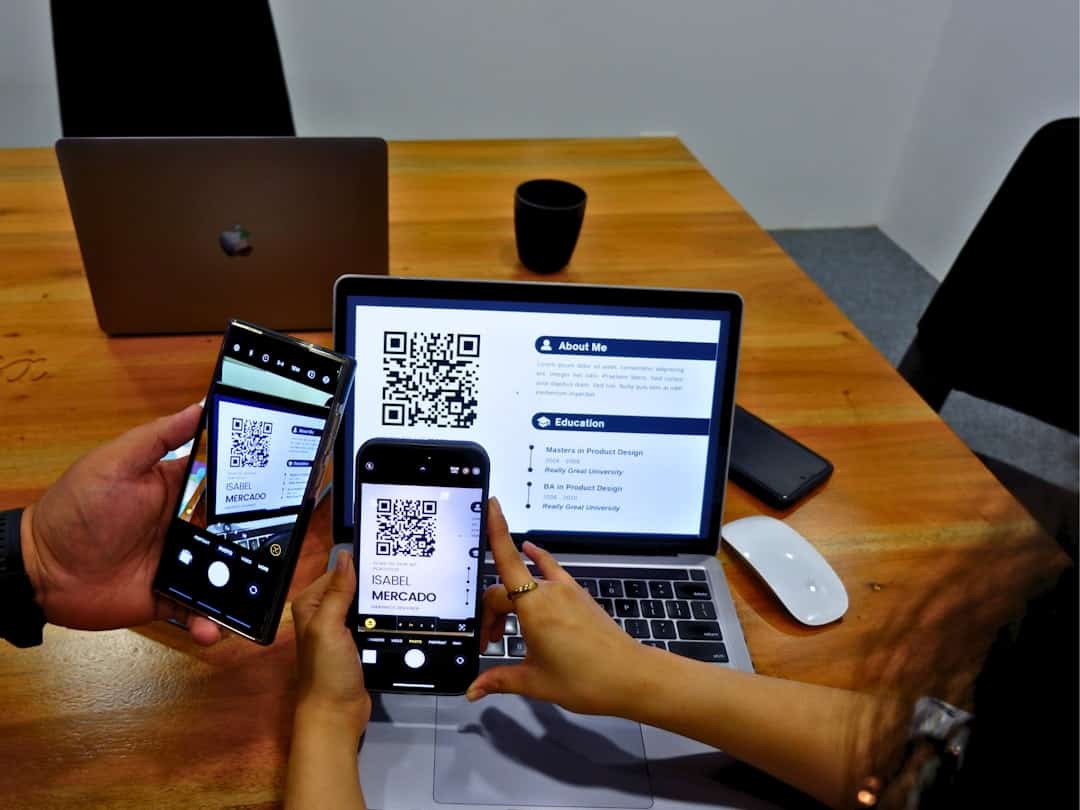
For example, a QR code on a printed card may direct recipients to a branded landing page that mirrors the card’s visual elements. Fonts, color schemes, and logos align seamlessly between offline and online environments, reinforcing brand continuity.
Digital integration also supports analytics. Companies can track engagement with QR codes or virtual cards, providing insight into networking performance and marketing impact.
Compliance and Legal Considerations
Certain industries require strict adherence to regulatory standards. Financial institutions, healthcare organizations, and legal firms often must include specific disclosures, certifications, or licensing information on business cards. A centralized business card maker ensures that these details remain correctly formatted and consistently displayed.
Automatically embedding required disclosures within templates mitigates legal risk and prevents accidental omissions. This level of control is particularly valuable in highly regulated sectors.
Best Practices for Implementing a Business Card Maker
To maximize effectiveness, organizations should approach implementation strategically:
- Define Clear Brand Guidelines: Establish precise rules for typography, color palettes, spacing, and imagery.
- Create Master Templates: Develop standardized layouts aligned with brand objectives.
- Set Access Permissions: Control who can modify templates or approve changes.
- Integrate with Trusted Vendors: Ensure print quality remains consistent.
- Provide Training: Educate staff on proper usage and brand expectations.
Proper planning ensures the system operates efficiently and reinforces branding objectives rather than complicating workflows.
The Long-Term Impact on Brand Equity
Over time, small details accumulate into substantial brand equity. A consistently designed business card contributes to a cohesive narrative that customers and partners internalize. Each interaction becomes a reinforcement of reliability and professionalism.
When employees across departments present unified materials, it signals organizational alignment. This alignment extends beyond aesthetics—it reflects operational stability and shared purpose. A simple card, designed through a standardized maker, becomes a microcosm of the brand’s integrity.
Ultimately, business card makers designed for consistent brand presentation are not merely tactical tools. They represent strategic investments in brand stewardship. By combining automation, controlled flexibility, and centralized oversight, these platforms empower organizations to maintain high standards across every printed interaction.
FAQ
- Q: Why are business card makers important for brand consistency?
A: They ensure that all cards follow approved templates, use correct logos and colors, and adhere to established brand guidelines, preventing inconsistencies. - Q: Can employees personalize their business cards within these systems?
A: Yes, most platforms allow customization of designated fields such as name, title, contact information, and sometimes additional elements like pronouns or QR codes, while keeping core branding fixed. - Q: How do business card makers reduce costs?
A: They minimize design errors, prevent reprints, automate formatting, and often integrate with approved vendors for bulk pricing and streamlined ordering. - Q: Are these tools suitable for small businesses?
A: Absolutely. Small businesses benefit from professional consistency and reduced design expenses, helping them present a polished and credible image. - Q: Can business card makers support rebranding efforts?
A: Yes, centralized systems allow organizations to update templates and brand assets instantly, ensuring all future cards reflect the new identity. - Q: Do modern business card makers integrate with digital tools?
A: Many platforms support QR codes, NFC technology, and digital card versions, maintaining visual consistency across both physical and digital formats.